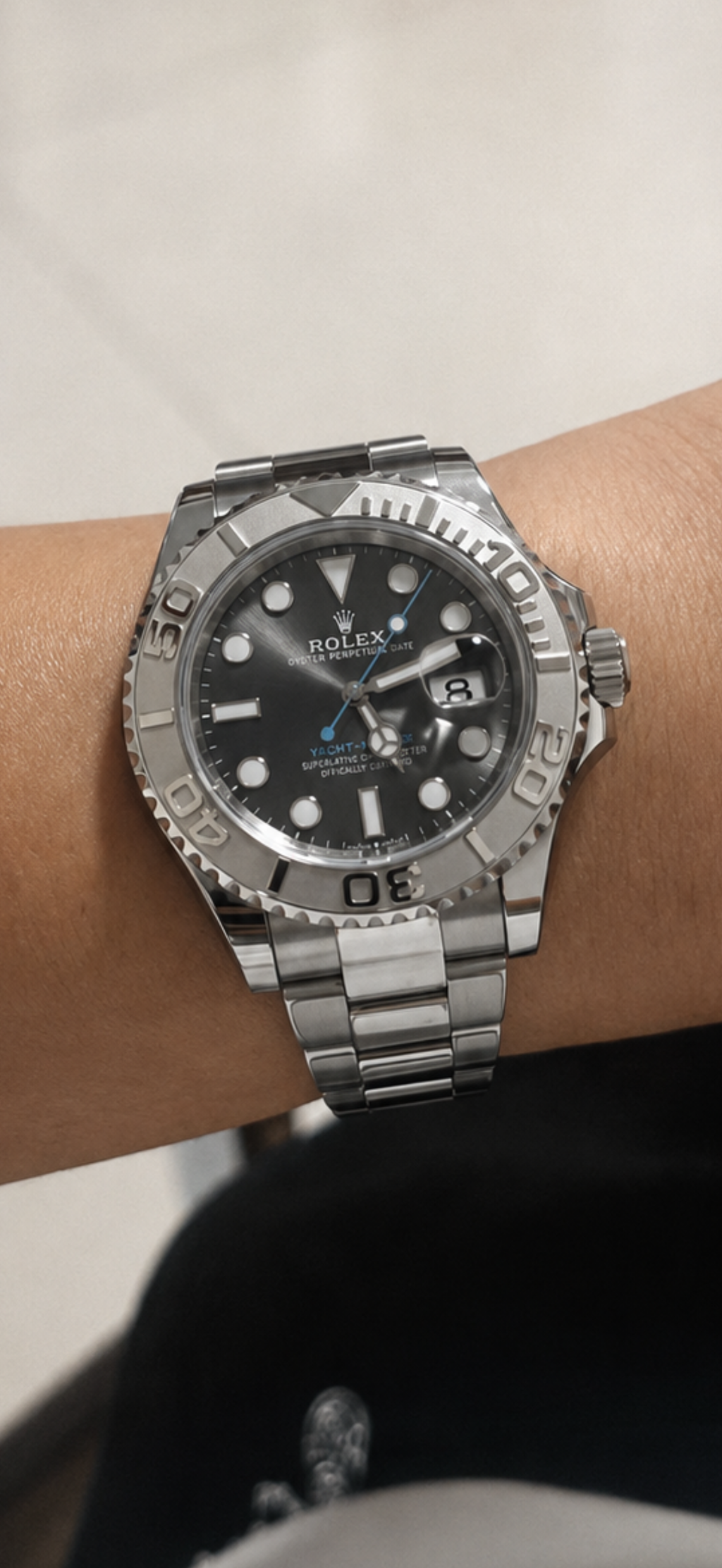
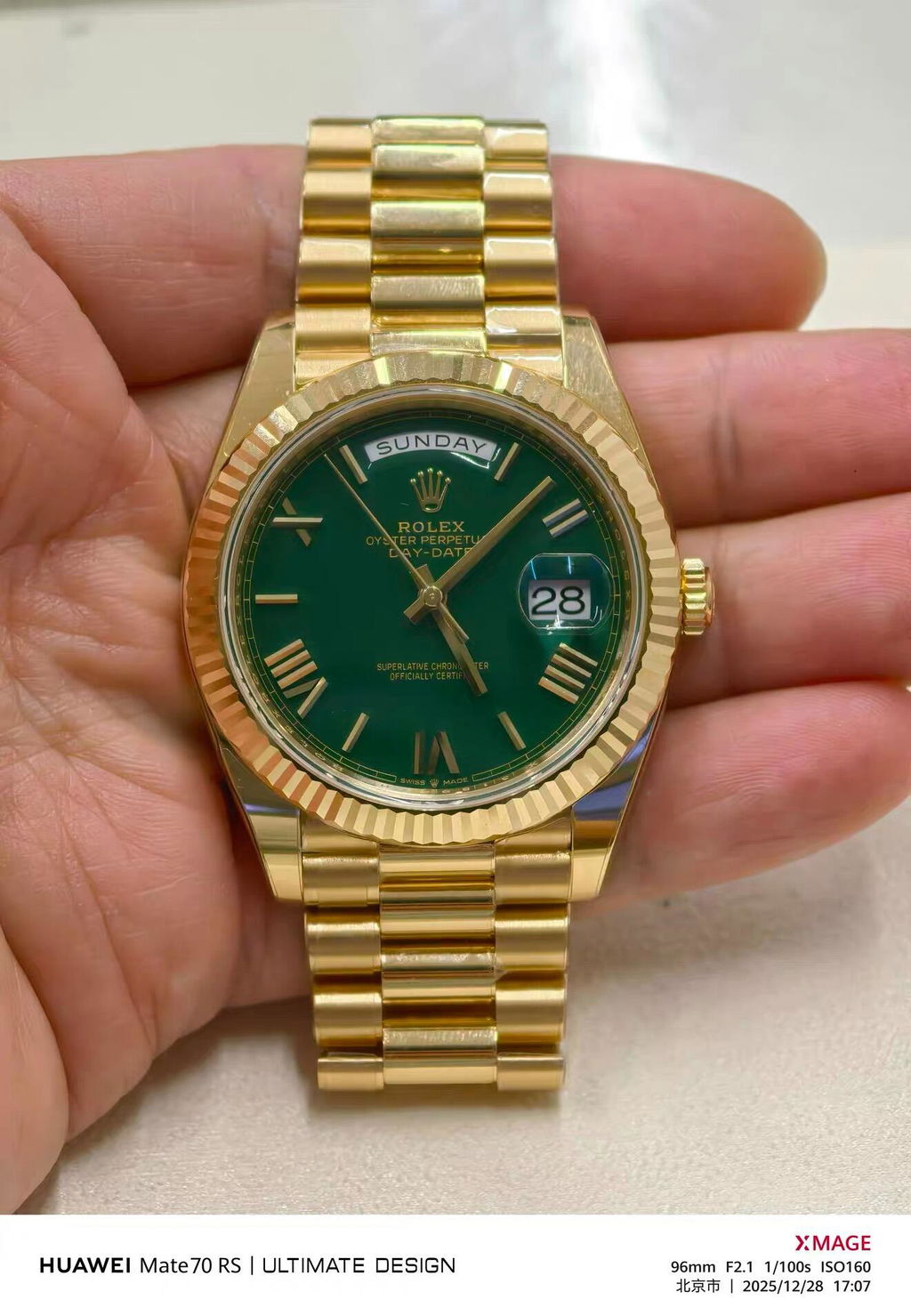
For no other manufacture is condition scrutinised as closely as for Patek Philippe. Hand finishing, polished angles, surfaces worked to the micron: these are precisely what give the piece its value, and they are what make every scratch so visible.
For an owner, the question is therefore not just aesthetic. It goes to the heart of what defines a Patek Philippe in good condition on the secondary market.
KEY POINTS
• Hand finishing (bevelling, mirror polishing) makes micro-scratches far more visible than on a standard industrial finish.
• The clasp and polished links remain the most exposed areas day to day.
• Polishing, even by a qualified watchmaker, can soften the crispness of hand-worked angles, a criterion collectors examine closely.
• The value gap between a "mint" example and a marked one can be significantly larger than for other manufactures.
• Well-cut invisible protection lets you wear the watch without exposing these finishes to avoidable friction.
WHY A PATEK PHILIPPE MARKS DIFFERENTLY
Most watch manufactures combine brushed and polished surfaces. At Patek Philippe, a large share of the finishing is done by hand: bevelled edges, chamfers, mirror polishing on some references.
This craftsmanship has a direct consequence: these very flat, highly reflective surfaces reveal the slightest micro-scratch under direct light, far more than a standard brushed or satin finish.
THE MOST EXPOSED AREAS
1. The clasp
As on any metal-bracelet watch worn daily, the clasp is in constant contact with desks, car armrests and cuffs. On a Nautilus or Aquanaut, the polished links of the clasp are particularly sensitive.
2. The bracelet links
On models with an integrated bracelet (the Nautilus in particular), the alternation of brushed and polished finishes creates a contrast in which the slightest mark on a shiny surface stands out immediately.
3. The case sides
The sides of the case, often polished with particular care at Patek Philippe, are exposed to accidental contact and small everyday knocks.
4. The crown and its guards
On some references, the crown and its guards form an extra raised area that is sensitive to side impacts.
THE IMPACT OF POLISHING ON A PATEK PHILIPPE
A watchmaker can soften scratches by polishing, but this always removes a thin layer of material.
On a piece whose value rests partly on the precision of hand-worked angles, poorly controlled polishing, or simply repeated polishing over the years, can gradually round off transitions the manufacture originally drew with precision.
This is an important difference from manufactures with more industrial finishes, where polishing has a proportionally less critical aesthetic impact.
WHAT BUYERS LOOK FOR ON THE SECONDARY MARKET
On specialist platforms, Patek Philippe listings very often mention the condition of the angles and the absence of previous polishing. A "full set, never polished" example clearly stands out in search results and with serious buyers.
Our article on what a scratch really costs on Chrono24 explains this condition-based valuation, which applies even more strongly here.
HOW TO PRESERVE A PATEK PHILIPPE WITHOUT CHANGING ITS LOOK
PreserveLayer™ is custom-cut for the exact reference of your watch, respecting each model's geometry: link width, case angles, lug curves.
The goal is not to cover the watch visibly, but to take the everyday friction on the most exposed areas, before polishing becomes necessary.
FAQ
Why are scratches more visible on a Patek Philippe than on other watches? Because a large share of the finishing is polished or bevelled by hand, which heightens the contrast between intact and marked surfaces.
Does polishing reduce a Patek Philippe's value? Polishing is not neutral: it removes material and can soften the crispness of the original angles, a criterion closely watched by collectors.
Can invisible protection cover an integrated bracelet like the Nautilus's? Yes, PreserveLayer™ pieces are matched to the specific geometry of each reference, including integrated bracelets.