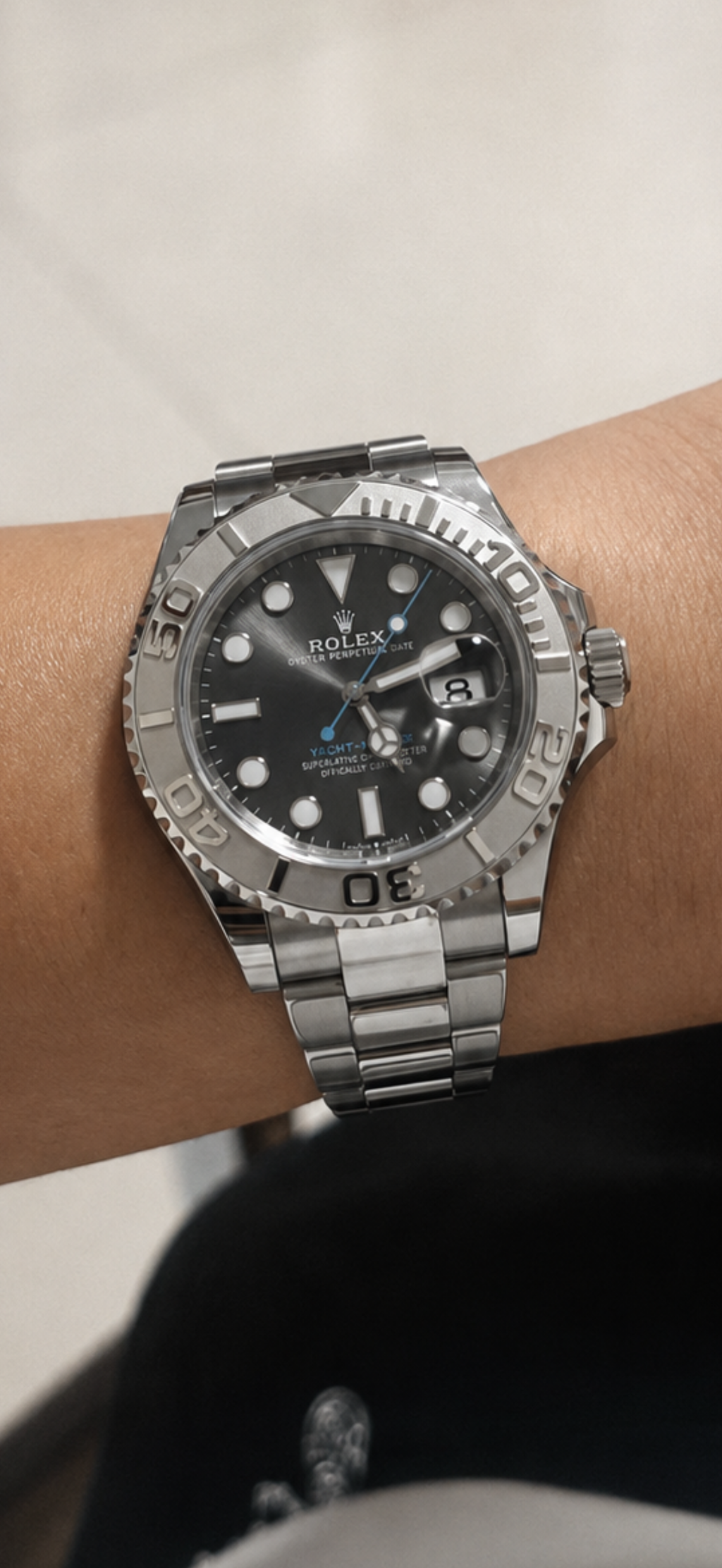
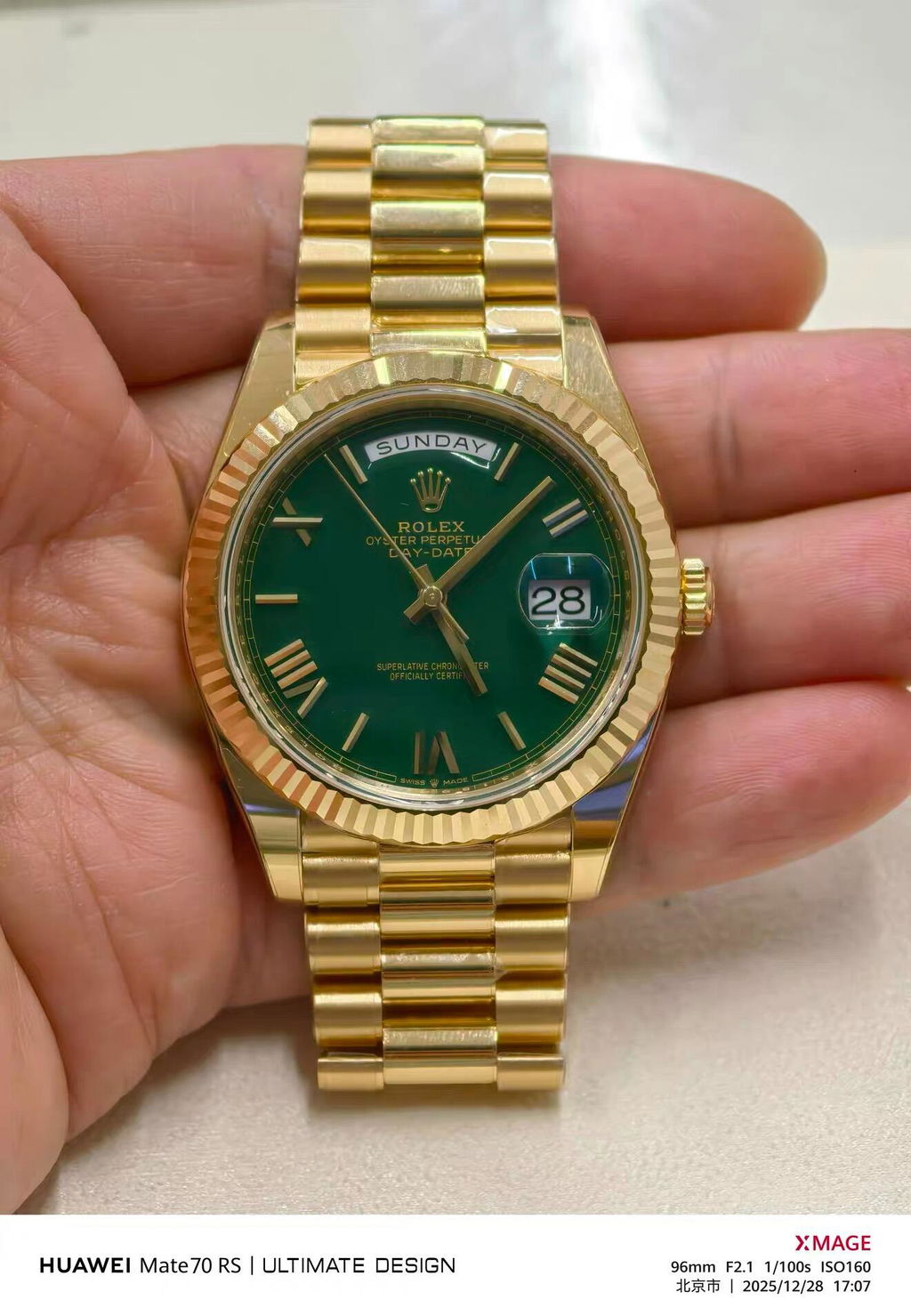
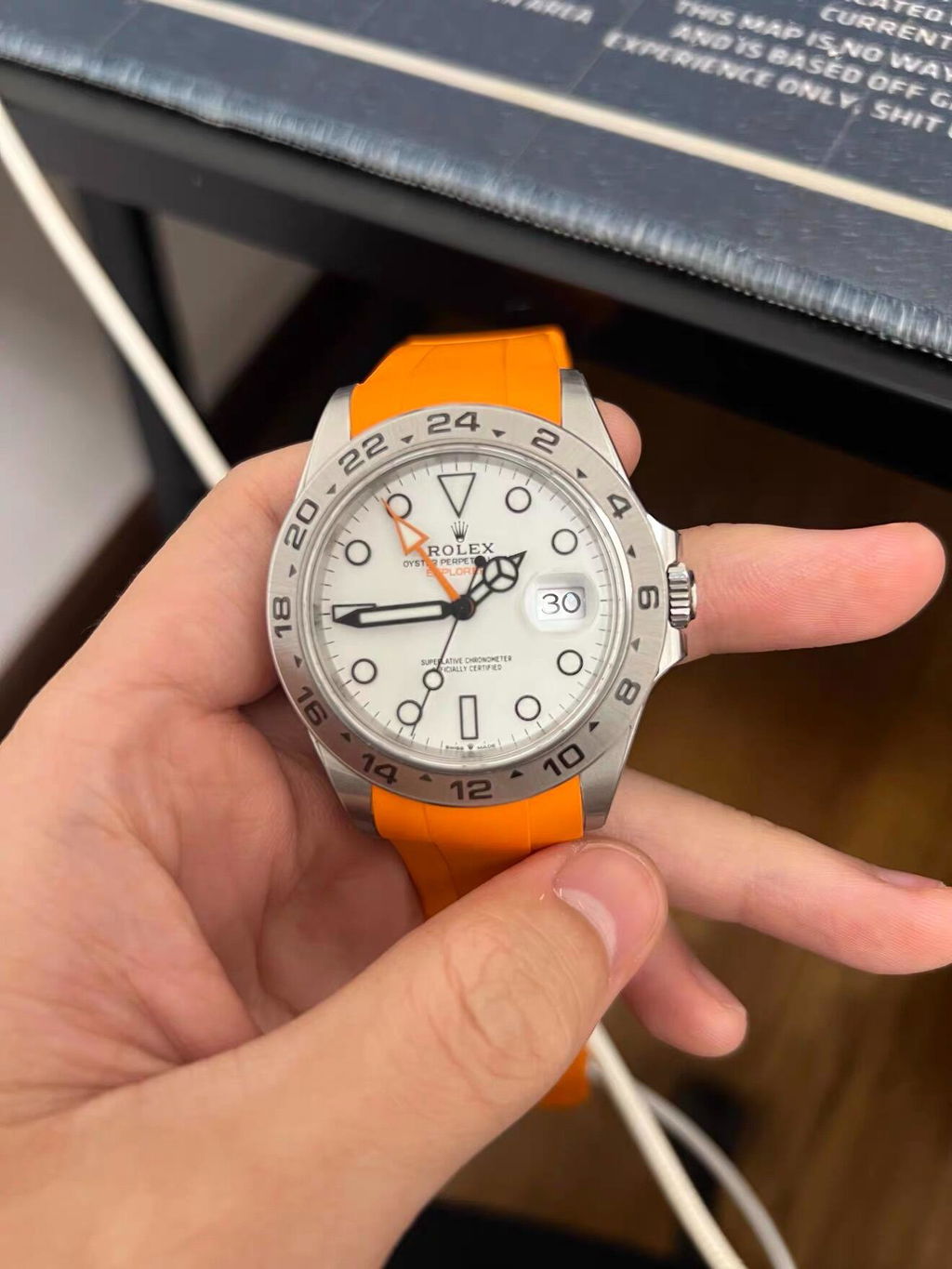
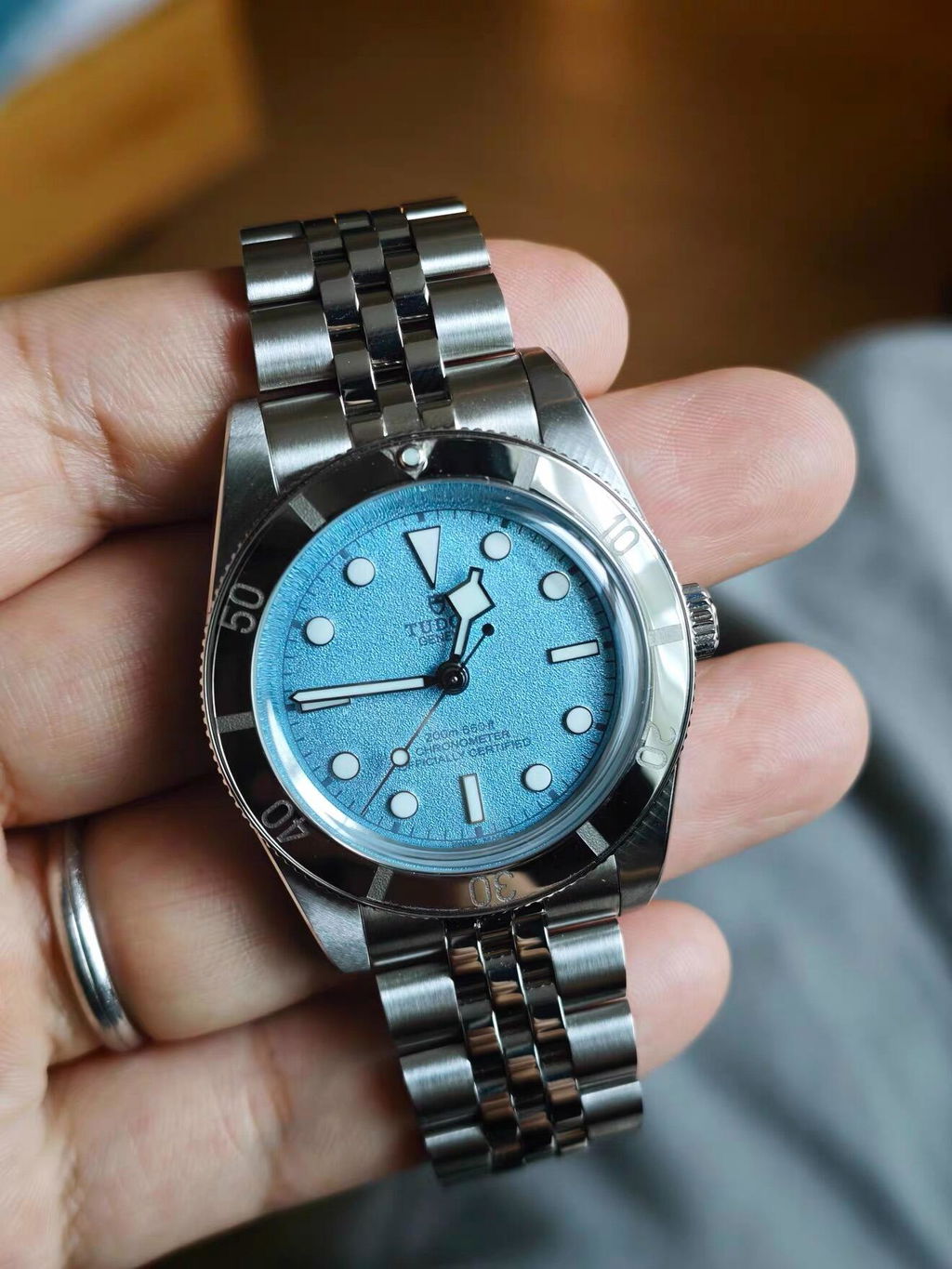
The Rolex GMT-Master II is one of the most sought-after watches on the market. Pepsi, Batman, Batgirl, Sprite, Bruce Wayne… some references have become true modern icons, worn by both enthusiasts and collectors who are attentive to their watch's value.
But when it comes to the value of a Rolex GMT-Master II, many only look at the reference, the year, the bracelet, or the presence of a full set.
This is a mistake.
In the pre-owned market, one detail can significantly influence the perception of a GMT-Master II: its actual condition. More specifically, the difference between a scratched watch, a polished watch, and an "unpolished" watch.
Why is the Rolex GMT-Master II so sensitive to condition?
The GMT-Master II is a watch designed to be worn. It's a luxury toolwatch, robust, sporty, and instantly recognizable. But it's also a Rolex that is highly susceptible to daily wear and tear.
The Oyster case, polished flanks, lugs, Oysterlock clasp, polished center links on certain versions, and the brushed surfaces of the bracelet are all areas that can quickly show marks.
An isolated micro-scratch isn't dramatic. But on a GMT-Master II, the accumulation of marks quickly changes the watch's overall appearance.
And that's where the notion of value comes into play.
A clean, crisp, well-preserved GMT-Master II, with sharp edges, immediately inspires confidence. It gives the impression of a respected watch, worn with care, and above all, preserved in its original condition.
Conversely, a heavily scratched watch often raises several questions for a buyer:
-
Was the watch worn without precaution?
-
Are the scratches only superficial?
-
Will the case need to be polished?
-
Are the edges still sharp?
-
Is the bracelet stretched or marked?
-
Has the watch already been restored to hide its actual condition?
In the Rolex world, these questions can directly impact the price.
What does "unpolished" really mean for a Rolex GMT-Master II?
The term "unpolished" means that the watch has not been re-polished since leaving the factory.
This point is essential.
An unpolished watch retains its original lines: the case edges, the shape of the lugs, the alternation between polished and brushed surfaces, and the exact proportions intended by Rolex.
This is particularly important for a GMT-Master II, as its design relies on a very precise balance between robustness, geometry, and finish.
A polish can make a watch appear visually brighter in the short term. But if it's poorly done or repeated multiple times, it can alter the shape of the case. The edges become rounder, the lugs can lose thickness, and the transitions between polished and brushed become less sharp.
To an untrained eye, the watch might look "cleaner."
For a collector or an experienced buyer, it might, on the contrary, lose its appeal.
That's why an unpolished GMT-Master II with a few light marks can sometimes be preferred over an over-polished watch that looks new in photos, but whose original geometry has been altered.
Scratched, polished, unpolished: what's the difference in value?
We need to distinguish between three situations.
1. The GMT-Master II worn but well-preserved
This is often the best scenario for an enthusiast.
The watch has been worn, but it remains clean. Scratches are limited, edges are sharp, the clasp is not badly damaged, the bracelet maintains good tension, and the case has not been excessively reworked.
This type of watch inspires confidence because it combines two important elements: it has lived, but it has not been neglected.
In the market, this profile generally sells the easiest.
2. The GMT-Master II scratched but still unpolished
This is a more nuanced situation.
A scratched watch can lose immediate attractiveness, especially if the marks are visible on the clasp, polished links, or case flanks. The buyer can use these scratches to negotiate the price.
But if the watch is still unpolished, it retains a significant advantage: its original condition has not been modified.
In other words, it may be scratched, but its geometry remains authentic.
For some buyers, this is preferable to a watch that has been polished multiple times.
3. The GMT-Master II polished or over-polished
This is the most sensitive scenario.
A light, correctly performed polish is not necessarily dramatic on a modern watch. But repeated or poorly executed polishing can cause a Rolex to lose part of what makes it valuable: its sharp lines, angles, case shape, and proportions.
On a GMT-Master II, this is particularly noticeable on the lugs, flanks, chamfers, and the consistency between polished and brushed finishes.
An over-polished watch can be harder to sell to a discerning enthusiast, even if it appears visually brighter.
Why scratches cost more than you think
Many owners think a scratch is not a big deal because "it can be polished out."
But that's precisely where the problem begins.
Polishing a watch isn't just about removing a mark. It's about removing a thin layer of material. And on a watch like the GMT-Master II, each intervention can slightly alter the original lines.
A single micro-scratch doesn't necessarily have a significant impact. But an accumulation of visible scratches can lead to three consequences:
First, it degrades the overall appearance of the watch.
Second, it gives the buyer a negotiation point.
Third, it can push the owner to consider polishing, with the risk of losing the "unpolished" status.
This point is often underestimated.
The real issue isn't just the scratch.
The real issue is what the scratch leads to.
Concrete example: the impact on a modern GMT-Master II
Let's take a modern stainless steel Rolex GMT-Master II, such as a 126710BLRO Pepsi, a 126710BLNR Batman/Batgirl, or a 126710GRNR Bruce Wayne.
These watches often trade for high amounts on the secondary market. In this price range, even a difference of a few percent quickly represents several hundred, or even over a thousand, euros.
If a GMT-Master II is clean, complete, unpolished, and well-presented, it will be perceived as more desirable.
If it's heavily scratched, the buyer might ask for a discount.
If it has been visibly polished, the informed buyer might consider that the watch has lost some of its original integrity.
That's why the condition of a GMT-Master II should not be seen as a mere aesthetic detail. It is an element of value.
An unpolished watch is not necessarily a new watch
It's important to make the distinction.
An unpolished GMT-Master II may have been worn. It may have some marks. It may have a history.
But it has not been modified to hide its use.
This is precisely what appeals to many collectors: an honest watch, with its original lines, preserved proportions, and visible real condition.
The problem arises when scratches become too numerous or too deep. At that point, the owner faces a choice: accept a visual discount, or polish the watch and lose some of its authenticity.
In both cases, the value can be affected.
Why protect a GMT-Master II before the first visible marks?
The best strategy is not to repair after the fact.
It's to limit marks before they accumulate.
This is particularly true for the most exposed areas:
-
the clasp;
-
the bracelet links;
-
the case flanks;
-
the lugs;
-
the polished surfaces;
-
areas of contact with a desk, computer, or doorknob.
A GMT-Master II is worn daily. That's its charm. But daily use naturally exposes the watch to micro-scratches.
Protection allows you to enjoy wearing your watch while limiting premature visual wear.
Preserving does not mean hiding your watch
Some enthusiasts still oppose two visions: wearing your watch or preserving it.
But in reality, the two can perfectly coexist.
Preserving a Rolex GMT-Master II is not about leaving it in a safe.
It's not about refusing for it to live.
It's not about being obsessive.
It's simply understanding that details matter.
The case edges matter.
The clasp matters.
The bracelet matters.
The finishes matter.
The unpolished condition matters.
A watch can be worn, enjoyed, and preserved at the same time.
ChronoSkin: an approach designed for GMT-Master II owners
ChronoSkin was designed for owners who want to wear their watch without waiting for the first visible marks to react.
Our protection kits are custom-cut according to the most exposed areas of the watch. The 150-micron / 0.15 mm PreserveLayer™ film discreetly protects sensitive surfaces, while allowing you to enjoy wearing your watch daily.
The goal is not to transform the watch.
The goal is to preserve its condition.
On a Rolex GMT-Master II, this logic makes perfect sense: limit micro-scratches, avoid premature marks, and reduce the risk of needing a polish later on.
Because a GMT-Master II is made to be worn.
But it also deserves to remain true to its original lines.
Conclusion: on a GMT-Master II, condition is part of the value
The Rolex GMT-Master II is an iconic, liquid, and highly observed watch on the market. Its reference, year, bracelet, and full set matter, of course.
But its condition matters just as much.
A scratched watch can be worn with pleasure.
A polished watch may appear cleaner.
But an unpolished, well-preserved watch, with its original lines, retains a special appeal in the eyes of enthusiasts.
This is often where the real difference lies.
On a GMT-Master II, preserving its condition is not just a matter of aesthetics. It's a matter of respect for the piece, watchmaking consistency, and long-term value.
FAQ
Does a scratched Rolex GMT-Master II lose value?
Yes, if the scratches are visible, numerous, or deep, they can influence negotiations. The impact depends on the reference, overall condition, full set, bracelet, and the buyer's profile.
Is a polished GMT-Master II worth less than an unpolished one?
Not always, but an unpolished watch is often more sought after by collectors because it retains its original lines. Excessive polishing can reduce the watch's appeal.
Should a Rolex GMT-Master II be polished before selling it?
Not systematically. In many cases, it's better to present the watch in its actual condition, especially if it has never been polished. An informed buyer will often prefer to decide for themselves.
Which areas of a GMT-Master II get scratched fastest?
The clasp, bracelet links, case flanks, and polished surfaces are the most exposed areas in daily use.
Why protect a GMT-Master II?
To limit micro-scratches, preserve the watch's overall appearance, and reduce the risk of needing a polish later on.