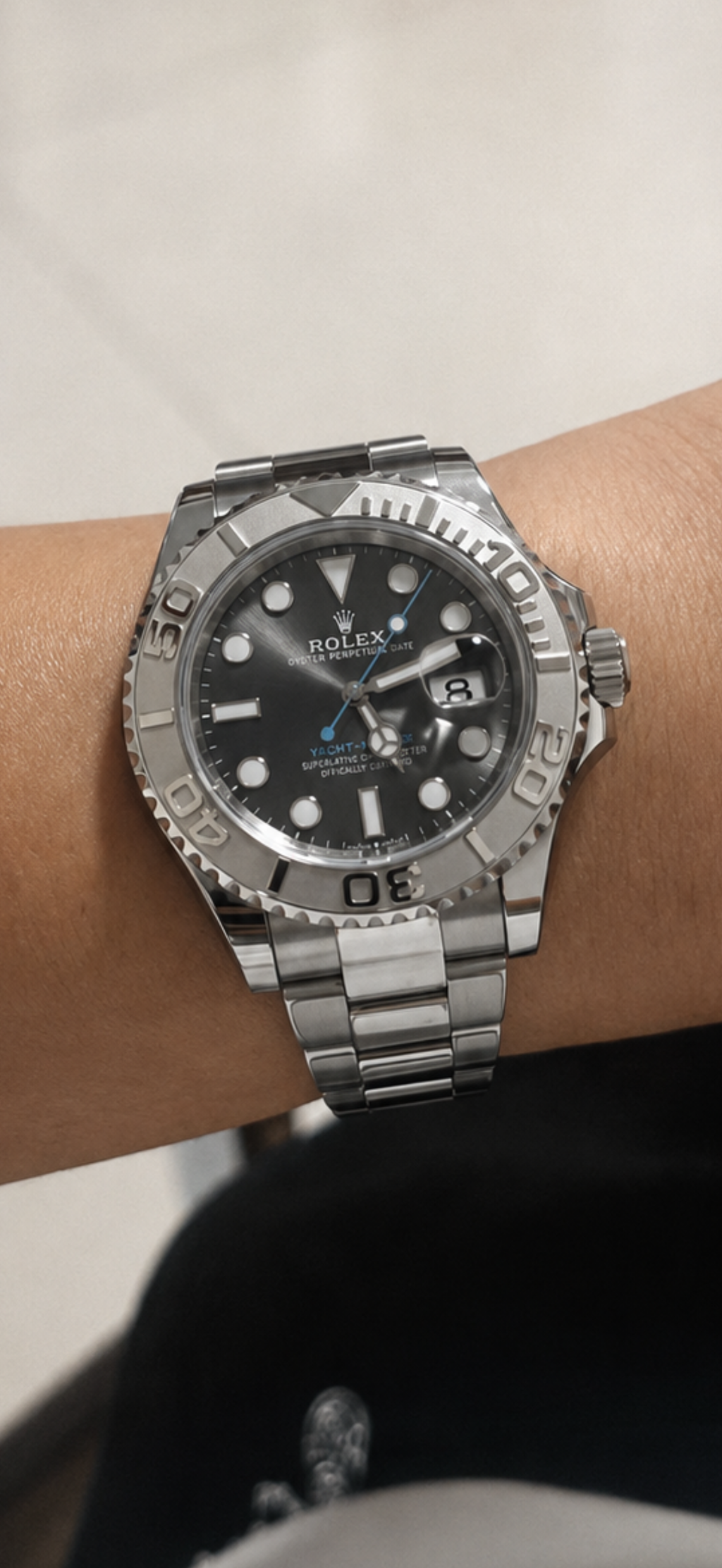
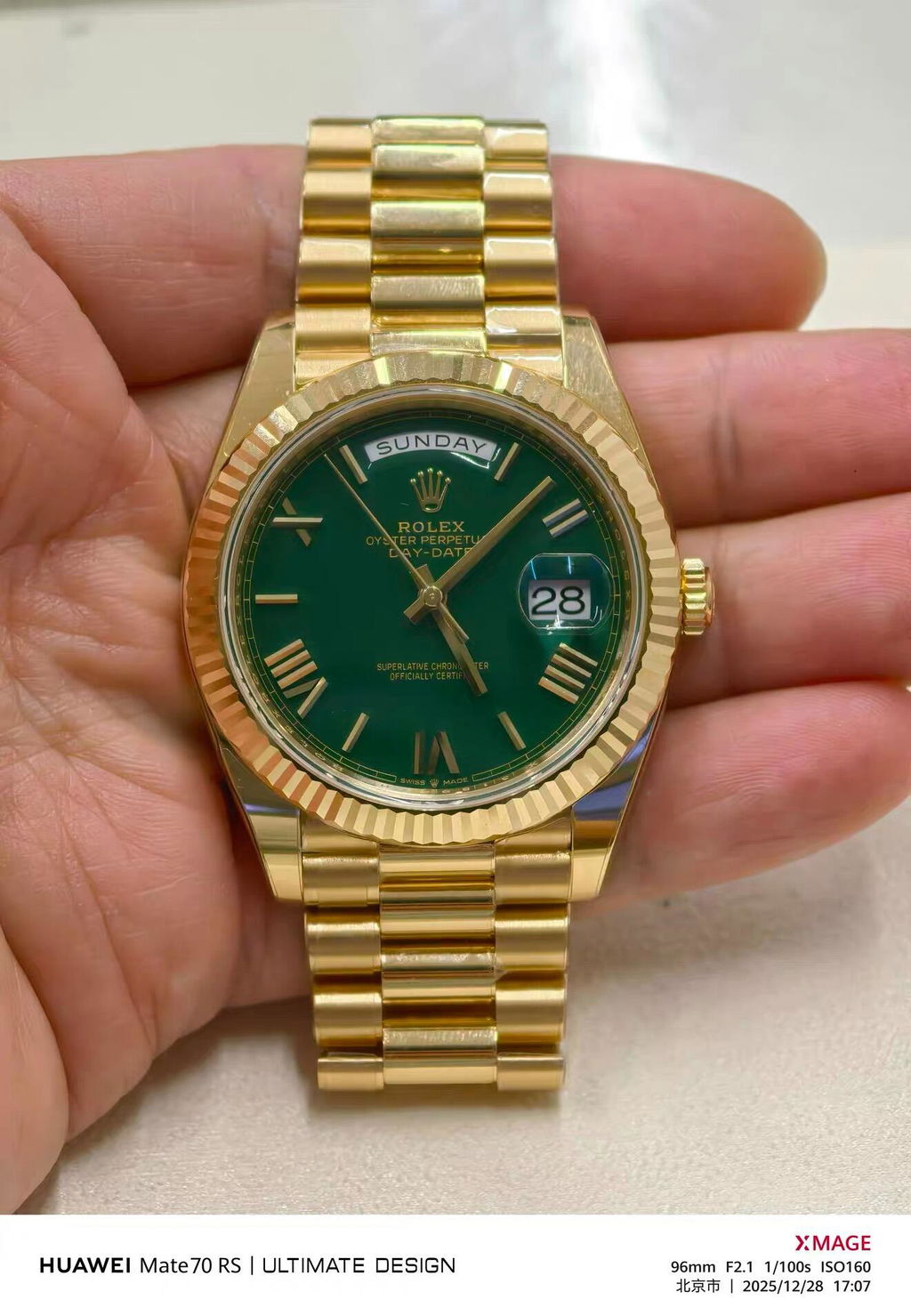
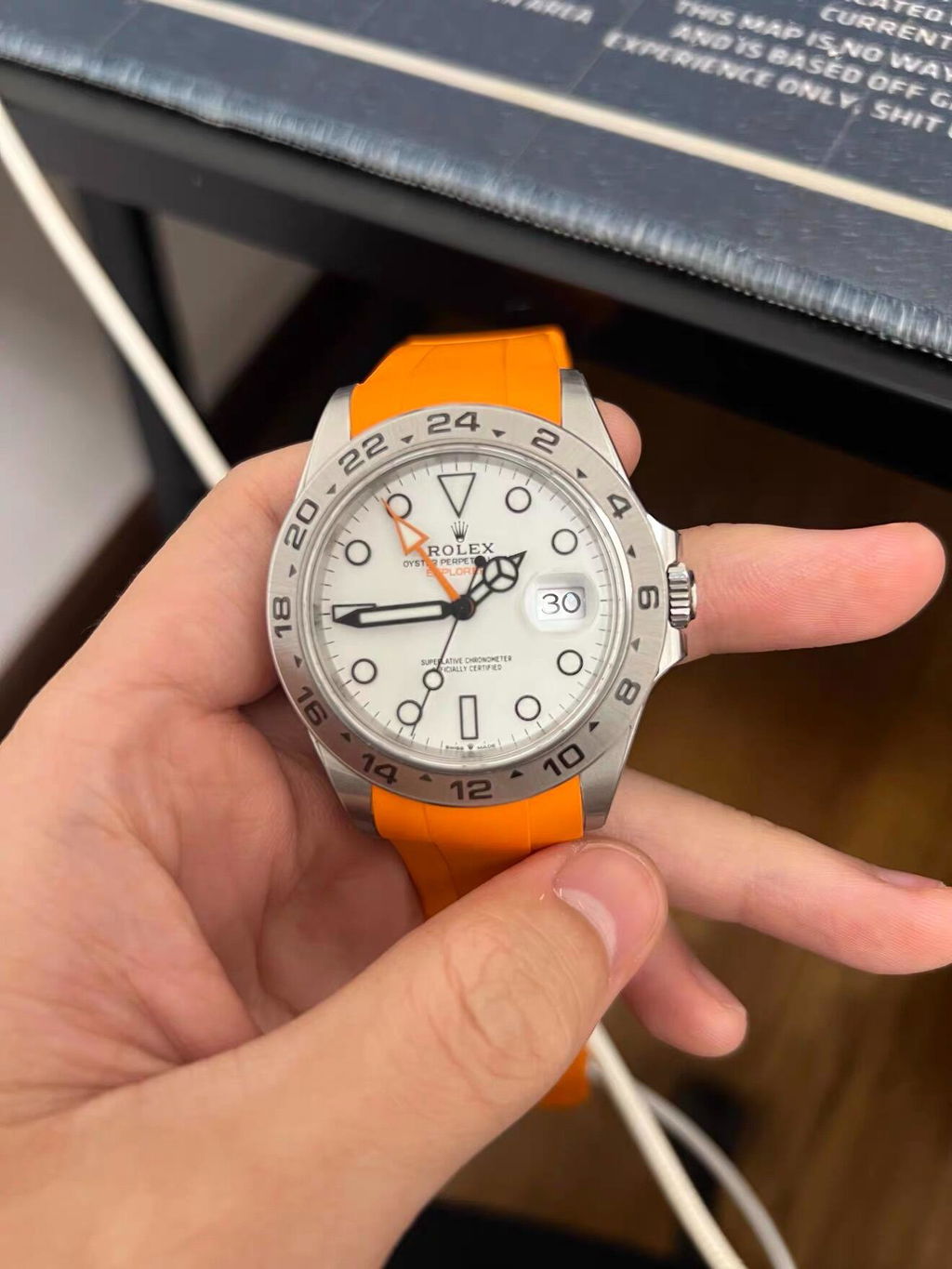
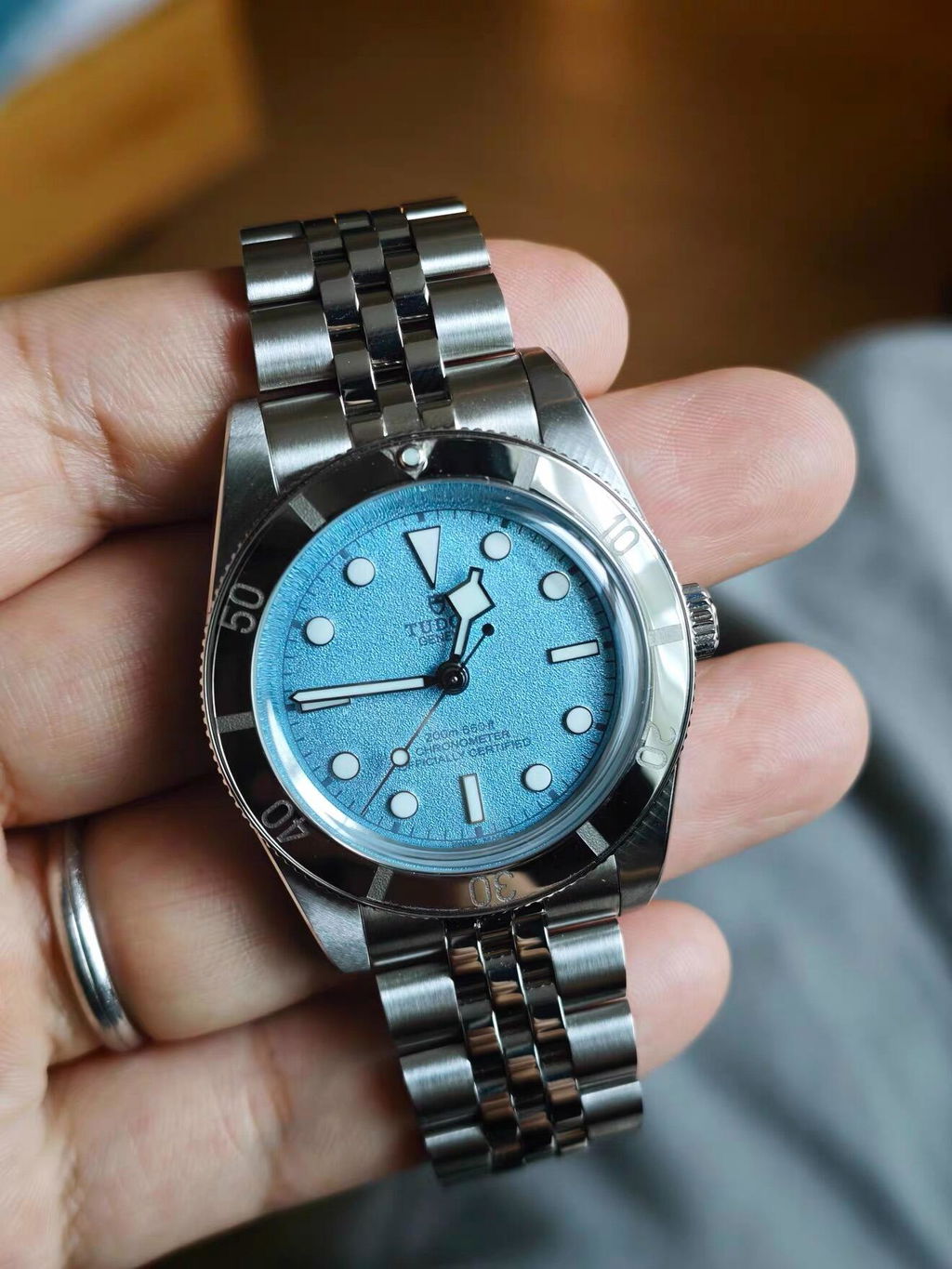
The term every collector knows — and most owners have never heard of
There's an insider vocabulary in haute horlogerie: salmon dials, tropical, full set. And then there's a less glorious term that every seasoned collector dreads: desk diving.
The expression is ironic — it borrows dive watch jargon to describe the only truly risky activity most Rolexes will experience: spending eight hours a day on an executive's wrist, under the cold light of an open-plan office.
This is not a collector's joke. It is the main cause of wear and tear for luxury watches in daily rotation. And the most insidious, because it is invisible.
What actually happens between your wrist and your desk
With every arm movement, your watch's clasp and lugs come into contact with a dozen different surfaces: the laminated edge of your desk, the metal hinge of your laptop, the keyboard, the leather of your armrest, the glass of a nearby phone, the fabric of your cuff.
Each of these surfaces contains hard particles: metal oxides, silica grains, abrasive dust residues. These particles are far too small for the human eye, but they are harder than the 904L steel that makes up your Rolex. With each friction, they strip away a few atoms from the factory polish.
Taken individually, these interactions are imperceptible. Accumulated over six months of daily wear, they produce what specialists call hazing — a veil of micro-scratches that gradually transforms the mirror polish of a clasp into an unintended satin finish. The metal is still there, but its "optical soul" has changed.
Why the factory polish is irreplaceable
The finish of a Rolex fresh from the factory is not merely aesthetic. It is a technical signature, obtained by successive polishing on felt discs impregnated with diamond pastes of decreasing grit, until the surface roughness falls below 0.05 micrometers.
This geometric perfection creates what the eye instinctively recognizes as new. This is why a full set and unpolished Rolex can be worth up to 30% more than an identical example that has been polished by a watchmaker.
The paradox is cruel: the very act intended to "repair" your watch is precisely what depreciates it. And it's often irreversible — each polish removes a layer of metal, rounds the chamfers, and softens the edges that gave the piece its personality.
The economic calculation nobody makes
Let's take a concrete example: a Rolex Submariner Date (126610LN) bought new in 2023 for about €10,000. After two years of daily wear without protection, its case and bracelet show visible hazing. You decide to sell it in 2026.
On the secondary market, two mentions will impact the price:
-
Unpolished: The piece trades around €11,500.
-
Polished or with visible signs of wear: The same reference drops to approximately €9,500, sometimes less.
The difference can be up to €2,000 — or 20% of the original price. For a steel Daytona, the difference often exceeds €4,000. For a Patek Philippe Nautilus, it regularly crosses €10,000.
It's not a scratch you chose to inflict. It's a financial asset silently depreciating, day after day, without your knowledge.
Three misconceptions that worsen the situation
-
“I'm careful with my watch, this doesn't concern me.” Desk diving has nothing to do with carelessness. It affects every daily wearer — even the most meticulous. Friction is mechanical, not behavioral.
-
“I can always have Rolex re-polish it.” An official polish costs between €300 and €800, takes several weeks, and most importantly: it rounds the edges. On a Submariner "Hulk" or a GMT-Master II, a single polish permanently alters the geometry of the lugs. Demanding collectors will pass.
-
“It's just a watch, it's made to be worn.” That's true — but worn doesn't mean damaged. The major manufacturers themselves integrate protections into their designs: oversized gold clasps, Oysterflex bracelets, ceramic. The real question is not whether to wear or protect, but how to do both.
Existing solutions (and their limits)
-
The safe: The solution of renunciation. Your watch doesn't wear out because it doesn't live. It loses its meaning, not its value.
-
Rotation with a "work watch": Many collectors wear a Tudor or a Longines to the office and reserve their Rolex for the weekend. Effective, but expensive: it requires a second watch and only displaces the problem.
-
Regular polishing: A bad solution for the reasons mentioned above. Each visit to the workshop erodes resale value.
-
High-precision protective film: The emerging solution, borrowed from the automotive industry where PPF (Paint Protection Film) has become the norm for collector vehicles. Applied to exposed areas — clasp, lugs, center links — a transparent film less than 200 microns thick absorbs micro-scratches instead of the metal. It is removed at the time of resale to reveal an intact surface.
This approach gave birth to ChronoSkin. Developed in a French laboratory, laser-cut for each reference, the film precisely protects the areas that suffer from desk diving without altering the watch's aesthetics.
Key takeaways
Desk diving is not a theory. It is a mechanical, measurable, and financially significant reality for anyone who owns a watch worth thousands of euros. To ignore it is to watch an asset depreciate in silence.
To acknowledge it is to make a clear choice: wear the watch you love, every day — without letting every daily gesture chip away at it.
Discover ChronoSkin protections for Rolex → https://chronoskinlab.com/collections/rolex
The ChronoSkin Team — Horological precision laboratory, France.