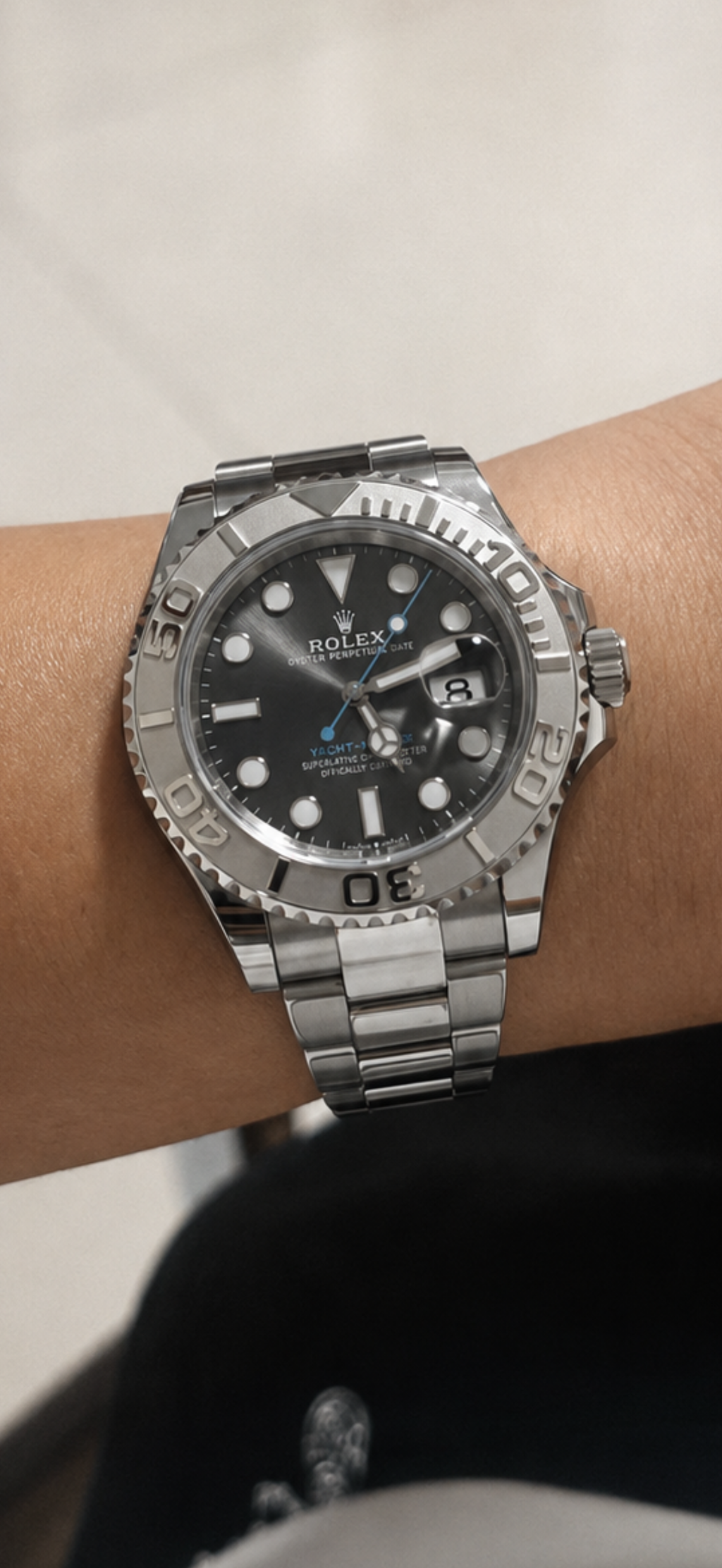
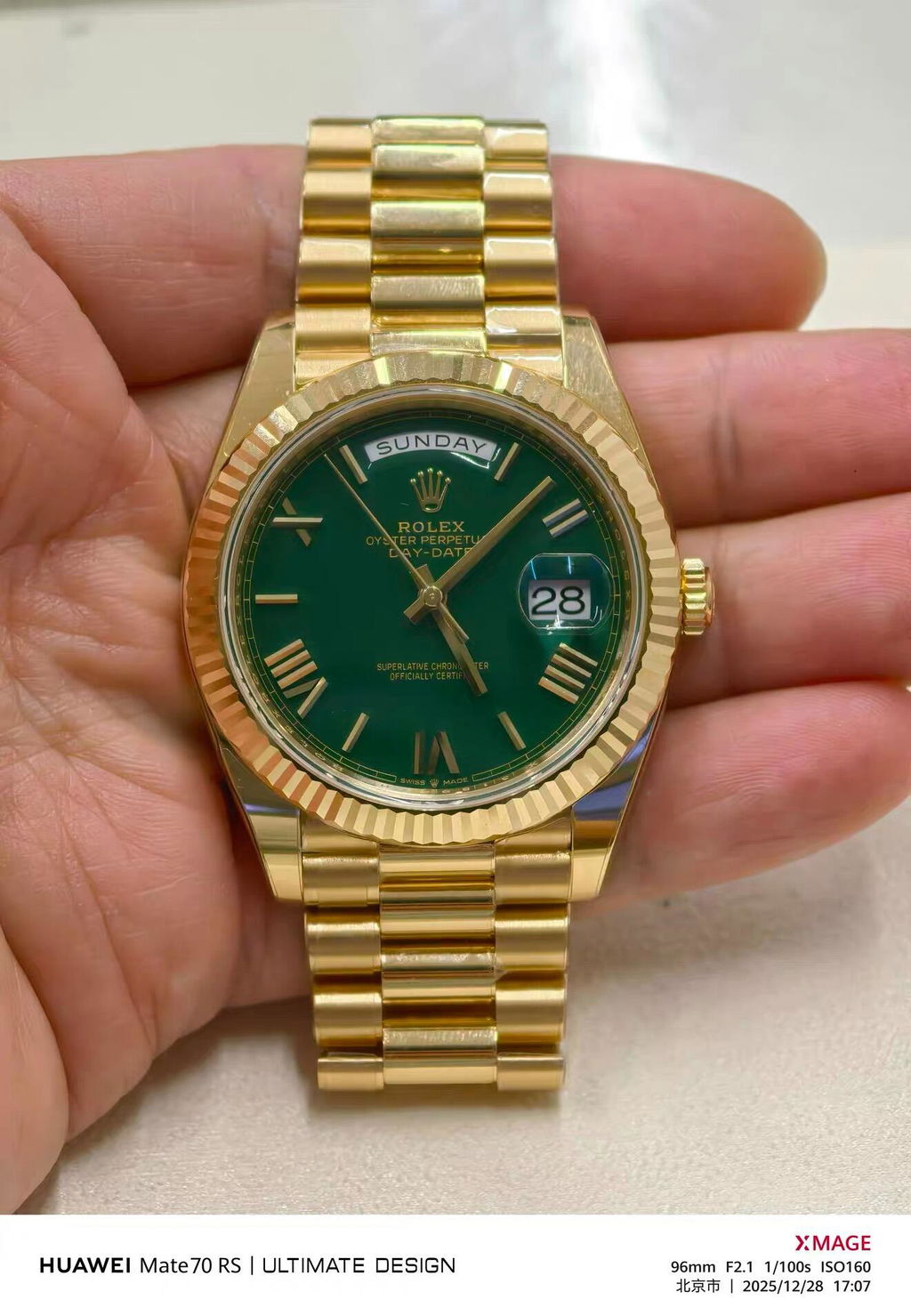
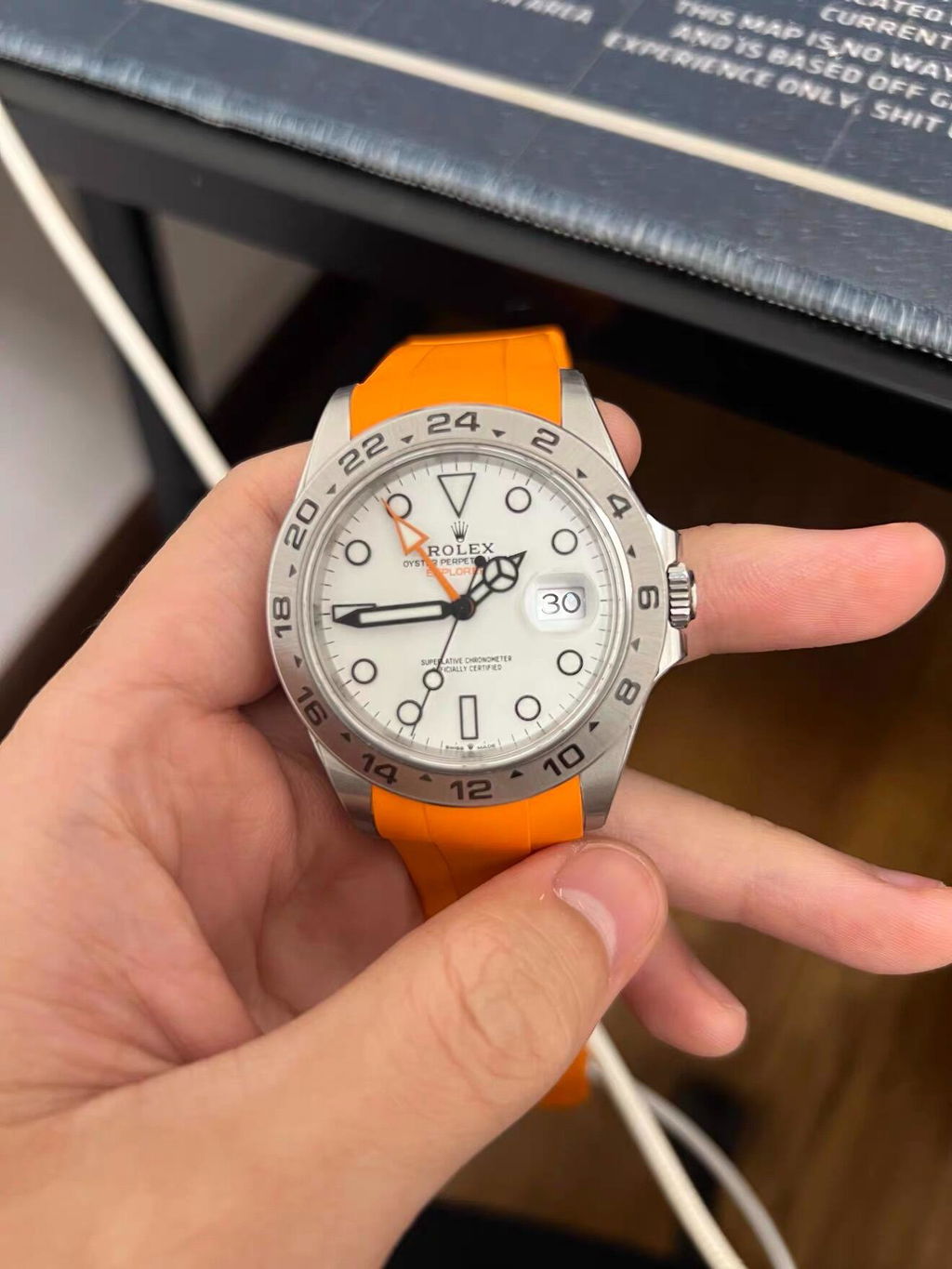
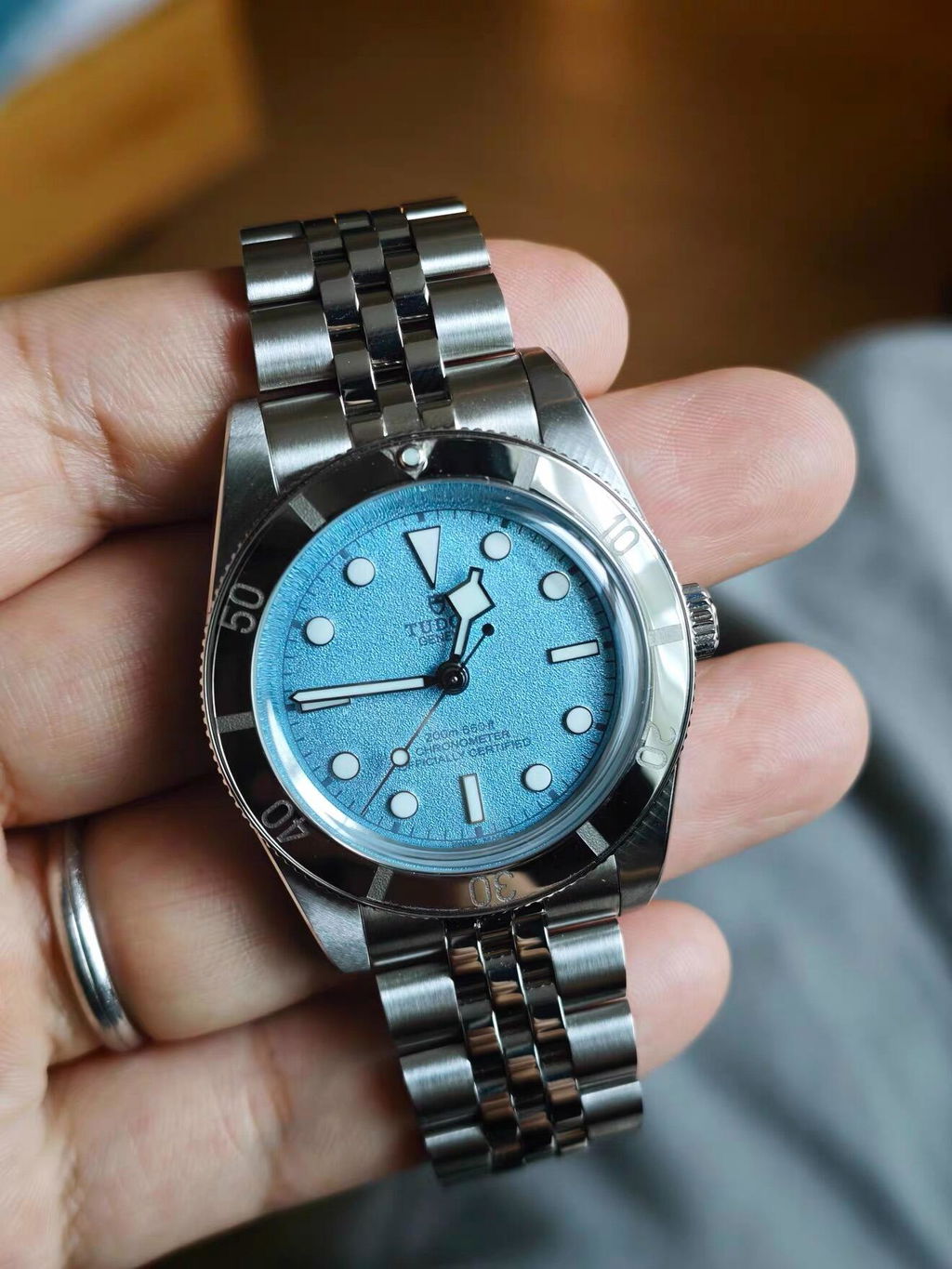
A gesture that seems harmless. But it's not.
You drop off your Rolex at a watchmaker's. He inspects it, performs the service, and returns it to you. It gleams. The scratches are gone. You are delighted.
What you don't know: your watch may have just lost, in a single operation, the equivalent of several months' salary.
Polishing is probably the most misunderstood maintenance act in luxury watchmaking. It is often offered as part of a standard service, presented as a normal maintenance step, sometimes even included for free. And yet, in the world of collectors, "polished" is the word that causes prices to drop.
What polishing really is
Watch polishing is a controlled abrasion. The operator passes the surfaces of the case and bracelet over rotating discs impregnated with progressively finer polishing pastes. The goal: to eliminate micro-scratches by removing a superficial layer of metal.
The logic seems simple and virtuous. A scratch is a physical mark in the metal. To remove it, enough material must be stripped away to go below it. What remains, polished again, will become smooth.
Except that the removed metal does not come back. And on a Rolex, every micron of lost metal is a micron that defined the personality of the piece.
The problem of bevels and edges
Modern Rolex watches are distinguished by their bevels — these beveled edges that run along the lugs and between the links of the Oyster bracelet. These bevels are factory-produced by extremely precise machining, followed by selective polishing that preserves the angular geometry.
During workshop polishing, these bevels are almost always rounded. Even a skilled operator cannot perfectly reproduce the original geometry. The lugs lose their sharpness (the famous "sharp" look), the case softens, the bracelet takes on a smoother but less architectural appearance.
To an untrained eye, the difference is invisible. To a collector, it is obvious at first glance. And it is this difference that creates the price gap.
Secondary market figures in 2026
Let's consider three emblematic cases on the current market:
-
Rolex Submariner Date 116610LN (production 2010-2020)
-
Unpolished example with papers: €9,500 – €10,500
-
Polished example with no other defects: €7,500 – €8,500
-
Average difference: €2,000 (20-25%)
-
-
Rolex Daytona 116520 (white dial, production 2000-2016)
-
Unpolished example: €24,000 – €28,000
-
Polished example: €19,000 – €22,000
-
Average difference: €5,000 (18-20%)
-
-
Rolex GMT-Master II 16710 "Pepsi" (production 1989-2007)
-
Unpolished example: €14,000 – €17,000
-
Polished example: €9,000 – €11,000
-
Average difference: €5,000 (30-35%)
-
On a vintage watch, the difference can exceed 40%. On an unpolished 1970s "Paul Newman" Daytona, the depreciation due to polishing can reach €100,000 or more.
Why is the market so strict?
The luxury watch market underwent a profound transformation in the 2010s. Collectors became more informed, more demanding, more technical. Platforms like Chrono24 and specialized auction houses have imposed a culture of absolute authenticity.
In this culture, a watch is a time capsule. It must bear witness to its era of production. Any subsequent human intervention alters this testimony. Polishing — even well executed — is a form of mild falsification in the eyes of purists.
Hence the coded mentions that appear in advertisements:
-
Unpolished: never repolished since leaving the factory.
-
Light polish: minor polishing, bevels preserved.
-
Polished: standard polishing, rounded lugs.
-
Heavy polish: significant polishing, altered geometry.
Each category corresponds to a price range. Moving from one to another means accepting a depreciation.
Cases where polishing makes sense
To be honest, polishing is not always a mistake. It is justified in three specific situations:
-
The watch is very damaged: Deep impacts that affect the overall perception of the piece.
-
The watch is already polished: If a previous owner had it polished, a second polish does not add further depreciation.
-
You have no intention of reselling: If the watch is to remain in the family, resale value is abstract.
In all other cases — which is the majority — abstention is the best choice.
The logic that changes everything: prevent rather than repair
The standard mindset of a Rolex owner is reactive: I wear my watch, then I have it repaired. This logic was valid when watches were tools.
Today, a Rolex is also an asset. And the rule for assets is the opposite: you don't restore them, you preserve them. This is what distinguishes informed collectors from mere wearers.
Practically, preserving means avoiding mechanical aggression upstream. This is the principle of protective film (like PPF in the automotive industry), which gave rise to micrometric watch protection films like ChronoSkin.
Applied to exposed surfaces — clasp, lugs, central links — an invisible 150-micron film absorbs micro-scratches instead of the metal. The factory polish remains intact. The mention "unpolished" remains defensible upon resale. The difference of €2,000 to €10,000 mentioned above is preserved.
A kit costs less than €80. The math is self-explanatory.
Key takeaways
Polishing is not a neutral repair. It is an operation that permanently alters the original geometry of your watch and, in most cases, erodes its market value.
Before saying yes during your next service, ask your watchmaker one question: "Is my watch currently trading as 'unpolished' on the market?" If the answer is yes, your next answer should be no.
Discover ChronoSkin protections for Rolex → https://chronoskinlab.com/collections/rolex
The ChronoSkin team — Horological precision laboratory, France.