Reading time: 7 min · Updated October 2026
The day you sell your Rolex, the price isn't set by the value quoted online. It's set by the person holding your watch under a loupe, in raking light, for a few minutes. In just a few gestures, an experienced dealer knows whether the watch has been worn with care, whether it has been polished, and how much they are willing to pay for it.
Understanding how they look is understanding what really drives the resale value of a luxury watch. And what drags it down.
In short: how a dealer assesses a pre-owned Rolex
- They first check whether the watch has been polished, examining the bevels, edges and lugs of the case under a loupe.
- An unpolished watch is generally worth more than a polished one, even if the polished watch looks shinier.
- Their offer = estimated resale price − their margin − possible service cost − condition-related discount. The condition-related discount is the only part the owner can control.
- A "full set" (box, warranty card, links, invoices) improves the offer, condition being equal.
- To get the best offer: don't have the watch polished before selling, gather the complete set, and protect exposed surfaces from day one.
Key terms
- Unpolished: a watch whose case and bracelet have never been refinished since leaving the factory. The edges and the split between brushed and polished surfaces are original.
- Bevel (chamfer): a narrow angled surface, usually polished, separating two faces of the case, for example the brushed top of the lugs and their side. It is the area that most easily reveals polishing.
- Full set: a watch sold with its box, warranty card and original accessories.
- Condition-related discount: the reduction a buyer applies based on wear, scratches or polishing observed.
The first few seconds: what the dealer is really looking for
A professional isn't just looking for scratches. They want to know whether the watch is "in original condition". A lightly marked but never-polished watch remains an authentic watch, with its factory edges and finishes. A watch that has been polished, even if it shines more, has lost part of its material and original geometry. That is irreversible, and it is the first thing collectors look at.
To find out, they almost always use the same tools: a watchmaker's loupe, a lamp or window light to play with reflections, and the trained eye of someone who has seen hundreds of examples of the same reference.
The 6 areas inspected under the loupe
1. The bevels and edges of the case
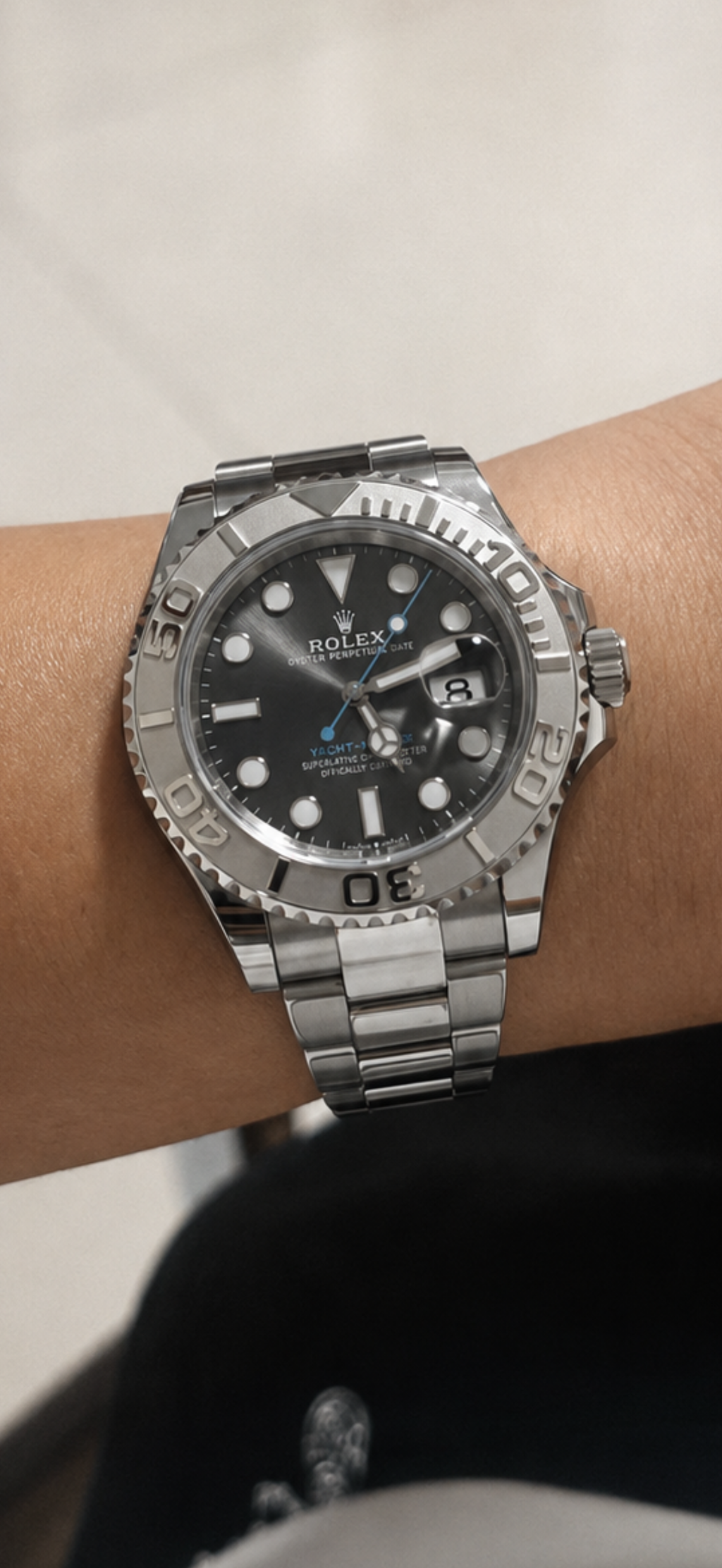
This is clue number one. On an original Rolex, the transition between the brushed top of the lugs and the polished side is crisp and sharp. After polishing, that edge becomes rounded and the line between brushed and polished blurs. A dealer spots it within seconds.
2. The lugs
Their thickness and shape reveal successive polishing. "Thinned" lugs or softened angles signal a reworked watch, which weighs heavily on the offer, especially for sought-after references.
3. The bezel
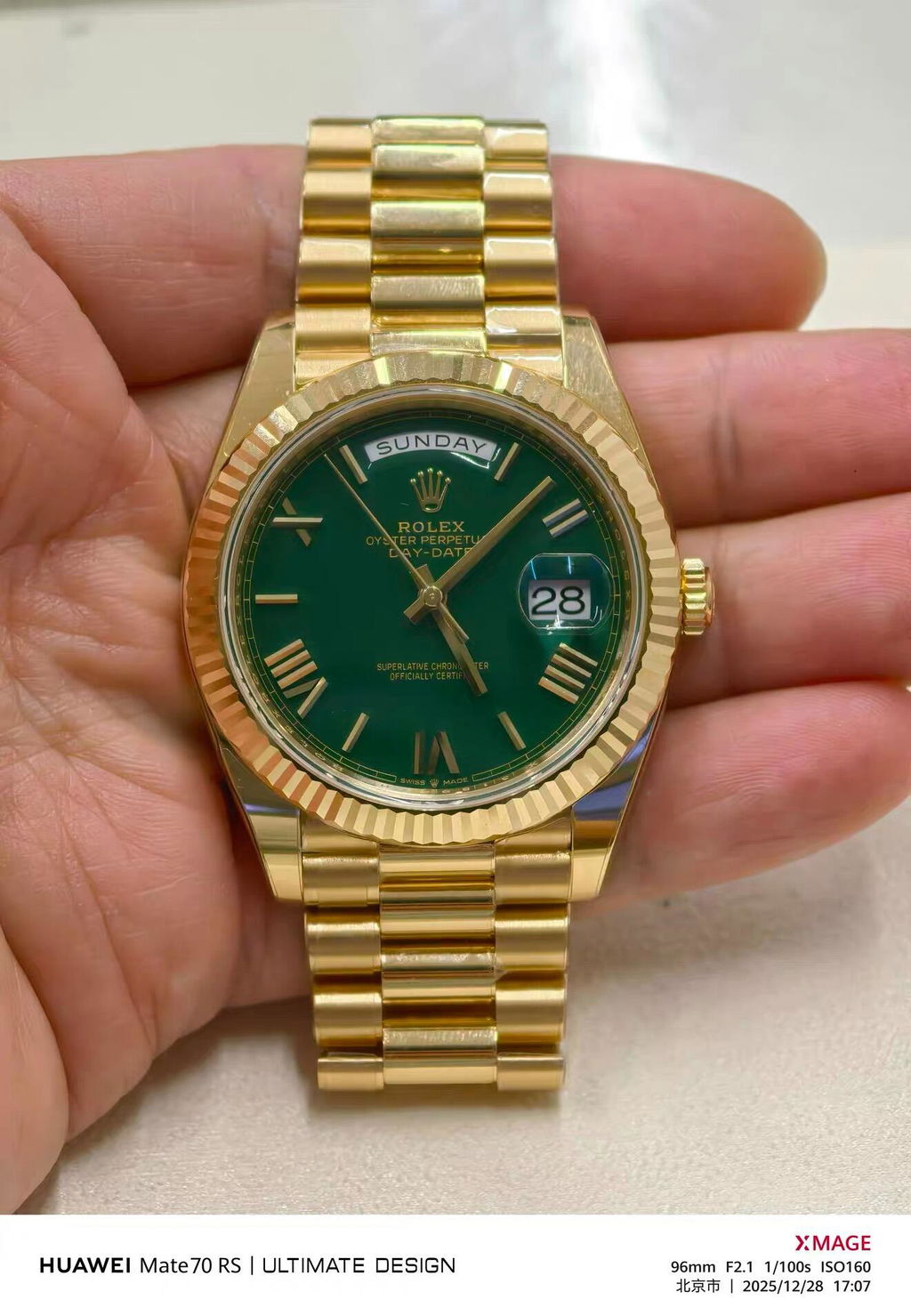
Cerachrom bezel (Submariner, GMT-Master II, Daytona): the dealer checks for chips or knocks, rare but costly. Fluted gold bezel (Datejust, Day-Date): they look at wear on the flutes, which soften over time and with polishing.
4. The clasp
This is the most exposed area in daily wear, the one that rubs against the desk, the keyboard, the table. A heavily marked clasp is an immediate indicator of overall wear. It is rarely decisive on its own, but it guides the rest of the inspection. We cover it in detail here: how to avoid scratches on a Rolex clasp.
5. The centre links of the bracelet
On a Jubilee or President bracelet, the polished centre links scratch easily. On an Oyster, the dealer also checks for bracelet stretch, a sign of a heavily worn watch.
6. The crystal and the caseback
Sapphire crystal resists scratches well, but a chip on the edge lowers the offer. The caseback often reveals how the watch has been worn and looked after.
Why a dealer prefers scratches to polishing
It's counter-intuitive, but it's one of the most consistent rules of the pre-owned market: a lightly scratched but never-polished watch is often worth more than a polished watch that looks "like new".
The reason is simple. A surface scratch is a cosmetic flaw. Polishing removes metal: the edges will never come back and the original geometry is lost. For a collector, "unpolished" is a selling point in its own right. We explain this in our article on how polishing affects the value of a luxury watch.
The practical consequence: never have a watch polished just before selling it in the hope of getting a better price. You risk the opposite effect.
Be careful at service time too. A full service at a service centre generally includes refinishing the case and bracelet, in other words polishing. If you want to keep the original condition, ask for it explicitly when you drop off the watch.
How condition translates into the offer
Every dealer has their own grid, but the logic is the same everywhere. They start from the price at which they think they can resell the watch, then subtract:
- their margin, which doesn't depend on you;
- the possible cost of a service if the maintenance history is uncertain;
- a condition-related discount, which depends directly on what they saw under the loupe.
| Condition observed | What the dealer sees | Usual effect on the offer |
| Original condition, never polished | Sharp edges, factory brushing and polish, few or no marks | Best offer; "unpolished" highlighted at resale |
| Scratched but never polished | Micro-scratches, marked clasp, geometry intact | Moderate discount; the watch remains sought after by collectors |
| Polished | Rounded edges, blurred transitions, thinned lugs | Largest discount; some buyers turn the watch down |
| Knock or chip (bezel, crystal) | Visible damage on a part that must be replaced | Cost of the part and labour deducted from the offer |
This third point is the one you control. Between a watch in original condition and the same model marked or polished, the gap is generally several percentage points of the price, and it can exceed 10% on the most sought-after references. On a watch worth more than €10,000, that quickly adds up to several hundred, or even several thousand euros. We compared real listings by condition in our article Rolex, AP, Patek: what a scratch really costs you.
These gaps vary by reference, market timing and dealer. But the direction never changes: with an equally complete set, the best-preserved watch gets the best offer, and it also sells faster.
The rest of the set matters too
Condition isn't everything. To get the best offer, also gather:
- the box and warranty card (the "full set");
- the bracelet links removed during sizing: an incomplete bracelet lowers the offer;
- invoices and service history, which reassure about the movement;
- original tags and accessories, if you kept them.
How to prepare your watch before selling
- Don't have it polished. Let the dealer judge the original condition.
- Clean it simply with a microfibre cloth and, for the bracelet, a soft brush and lukewarm water if the watch is water-resistant.
- Gather the complete set: box, papers, links, invoices.
- Take photos in natural light, front and side, to get comparable remote estimates.
- Ask for several offers: the gaps between professionals can be significant.
The best preparation starts on the day you buy
Everything the dealer inspects, the edges, the lugs, the clasp, the links, wears day after day, long before you think about selling. By then it's too late to go back: you can't "repair" an edge without removing metal.
That is exactly the role of a custom-cut protective film. Applied in the first days, it takes the daily friction instead of the metal. On the day you sell, it peels off without leaving residue: the dealer discovers surfaces in their original, never-polished condition, exactly what they are willing to pay the most for.
PreserveLayer™ kits are cut for each reference and are self-applied, with spare pieces included for practice. The step-by-step installation guide walks you through every stage.
Find the protection kit for your watch
Frequently asked questions
Can a dealer tell that a watch has been polished?
Yes, in the vast majority of cases. Rounded edges, a blurred line between brushed and polished surfaces and the shape of the lugs give polishing away, especially to a professional who knows the reference.
Should I remove the protective film before selling my watch?
Yes, remove it just before the inspection or the photos. The dealer needs to examine the metal directly, and that's when the protection pays off: the surfaces have stayed in their original condition.
Is it better to have my watch polished before selling it?
No. For most informed buyers, a never-polished watch, even lightly marked, is worth more than a polished one. Polishing is irreversible.
Do scratches on the clasp lower the price?
Rarely by much on their own, but a heavily marked clasp signals a heavily worn watch and steers the whole assessment. It's also the easiest area to protect.
Does a service make a watch lose its "unpolished" status?
It can, because a full service generally includes refinishing the case and bracelet. To keep the original condition, explicitly ask that no polishing be done.
What is a "full set" watch?
It's a watch sold with its box, warranty card and original accessories. Condition being equal, a full set generally gets a better offer than the watch alone.
About the author — Anthony Lottin is the founder of ChronoSkin. He designs custom protective films for more than a hundred luxury watch references (Rolex, Audemars Piguet, Patek Philippe, Omega, Cartier, Tudor…) and helps owners who want to preserve their watch's original condition.